

One business, three ways to start.
In the app’s sign-up flow, enter your business’s official website, the link to your Google Business Profile or your name along with your city. These three entry points help the tool identify the right business, even if you don’t have a website yet.
The analysis explores the information available about your business, your offer, your social presence, your market and your competitors. Results depend on what can be found: a proposed dossier doesn’t certify that information.
For the “Official website” entry, use your business’s website, not the URL of a social profile. With a name, add the city to avoid mix-ups between businesses with the same name. You’ll then check that the identity found is really yours.
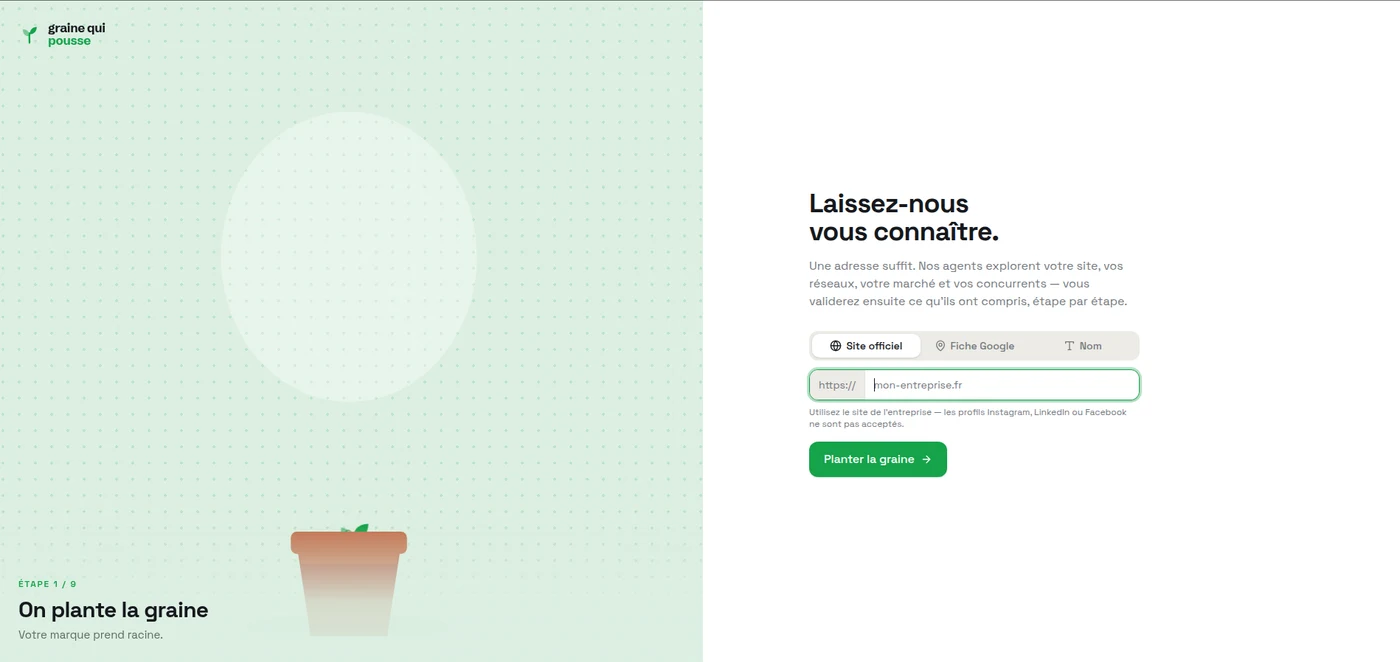
The tool suggests. You say whether it’s really you.
Once it starts, the flow has you review the information step by step: identity, brand, products and features, target customers, competitors, market and detected social accounts. The sections fill in as the analysis progresses.
Fix a description that’s too broad, remove a product you no longer sell, reword a tagline. The fields can be edited before you approve. Missing information or an incomplete analysis deserves your attention, not an automatic approval.
Detecting a social account in the dossier doesn’t give permission to publish on it. Connecting your accounts and their permissions are handled separately in the app.
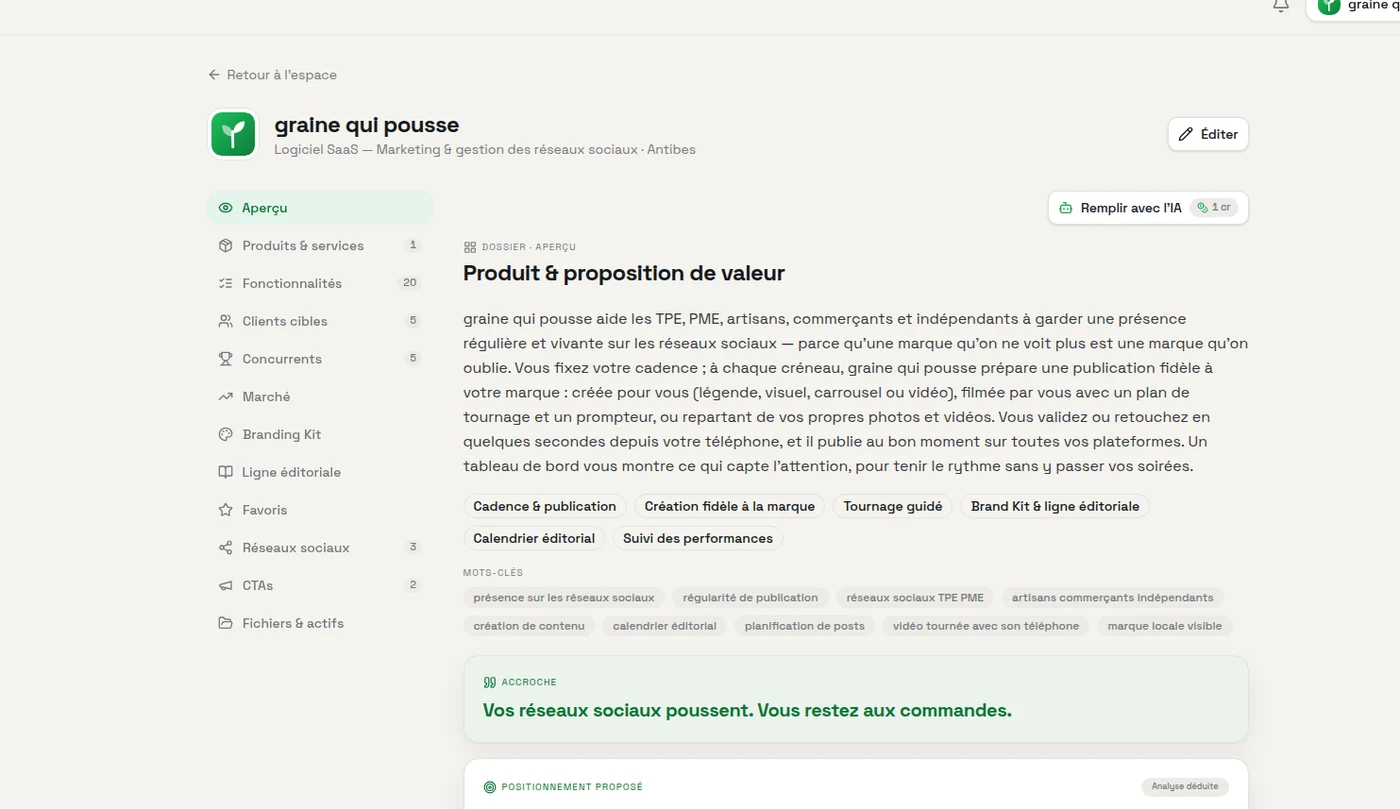
A clear offer. Readers in mind.
The catalog gathers your products and services; the features section details what your product lets people do. These can become topics for posts: presenting a service, explaining a use or answering a doubt before someone buys.
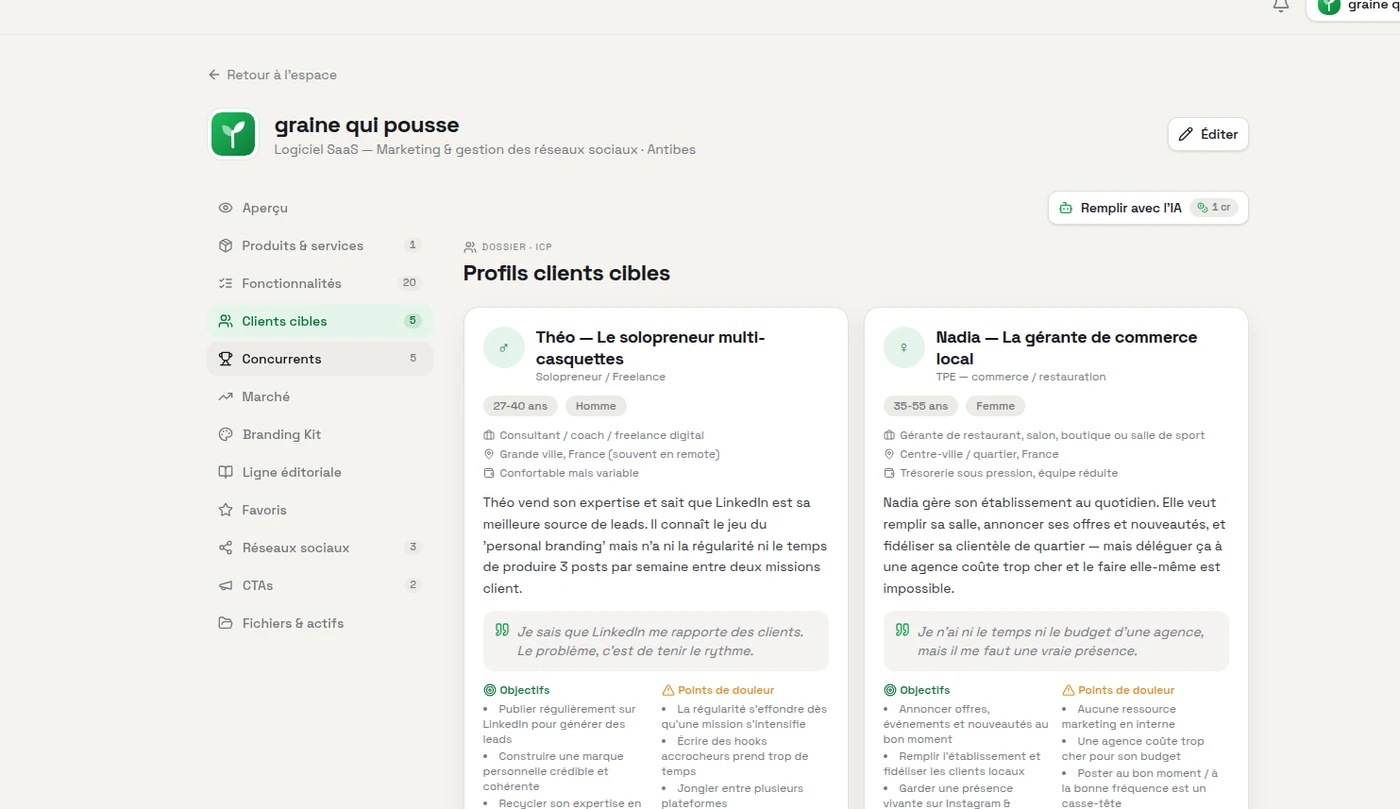
The suggested customer profiles describe goals, pain points and expectations. A shop owner short on time and a freelancer selling their expertise don’t have the same reasons to care about your offer. These profiles help you choose who a post is for.
They’re working hypotheses to adjust with what you know about your customers, not identified people or a measured audience study. You can edit the profiles and archive the ones that no longer fit your business.
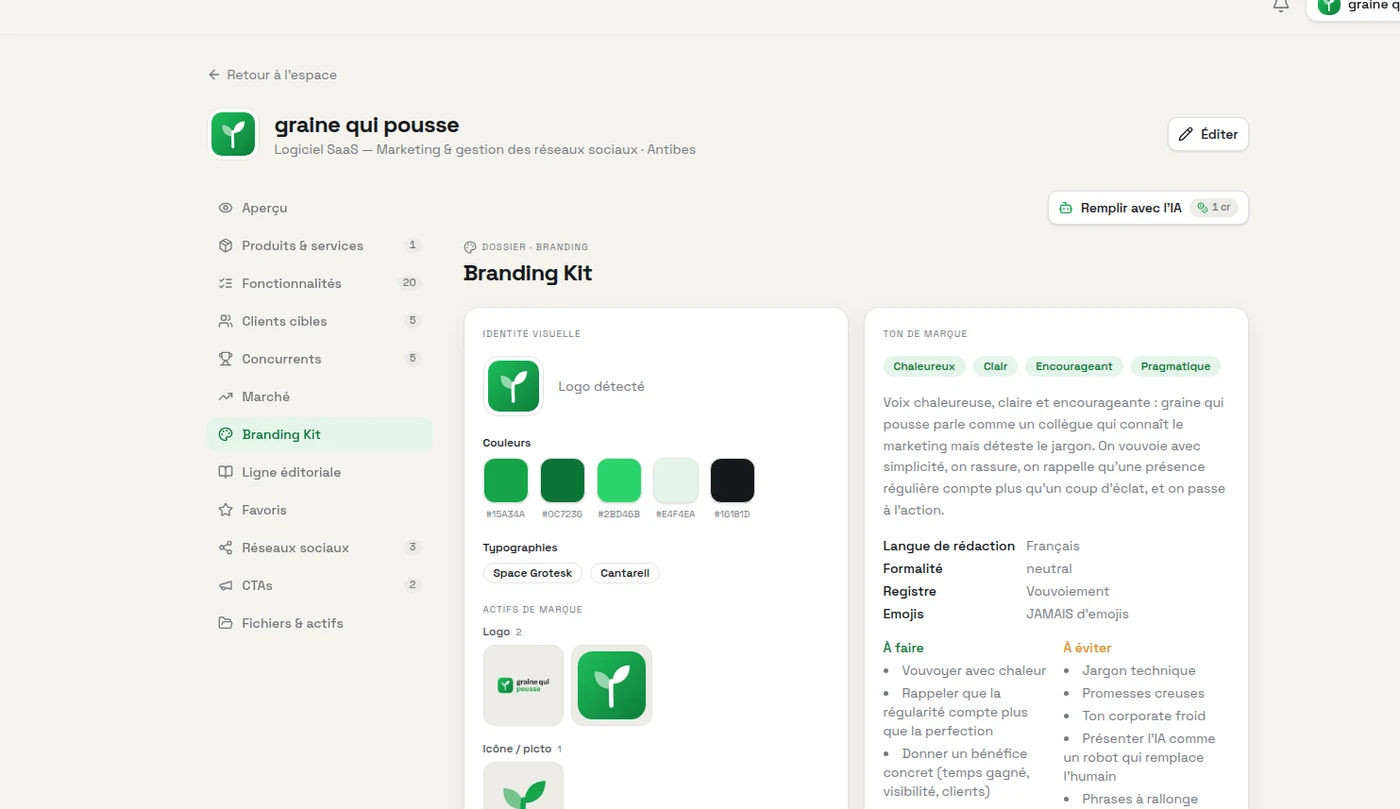
Your brand doesn’t fit in a logo.
The brand kit gathers the visual elements: logo, palette, fonts and brand assets. It also covers the way you speak: tone attributes, writing language, level of formality, formal or informal address, emoji use and words to avoid.
You can set very concrete guidelines: “warm but professional”, “explain without jargon”, “never promise guaranteed results”. These cues give direction to the text as well as the visuals. Image and video styles can be adjusted too.
The fonts you can use depend on the rendering catalog; the interface flags the ones that aren’t supported. The dossier guides generation, and the editors are still there to polish the final result.
Show what “in our style” means.
The editorial line holds reference posts by network and by format. Their media are analyzed to draw out structure, design and style. A layout, a rhythm or a way of explaining becomes a more concrete reference than a vague “make it look professional”.
Your proposals marked as examples join these references too. Calls to action by platform and the files in your library round out the dossier. You bring together what you want to say, how you want to say it and the media you have.
Find and reuse your brand’s media ↗Your business changes. So does the dossier.
A new service, a different target or a tone that’s evolving? Come back and edit the dossier. You can also ask the AI to fill in a section with a specific instruction, for example adding an offer from your website or revising the description of your business.
The tool shows the proposed changes and the sources available. You can accept some changes, reject others, then apply your selection. Updating the dossier doesn’t automatically rewrite the posts you’ve already created.
You then start from this context to prepare your next content. The dossier isn’t a form you fill in once and forget: it’s a foundation to keep true to your business.
Go from the dossier to your first proposals ↗